
Introduction to Plano-Concave Lens Technology
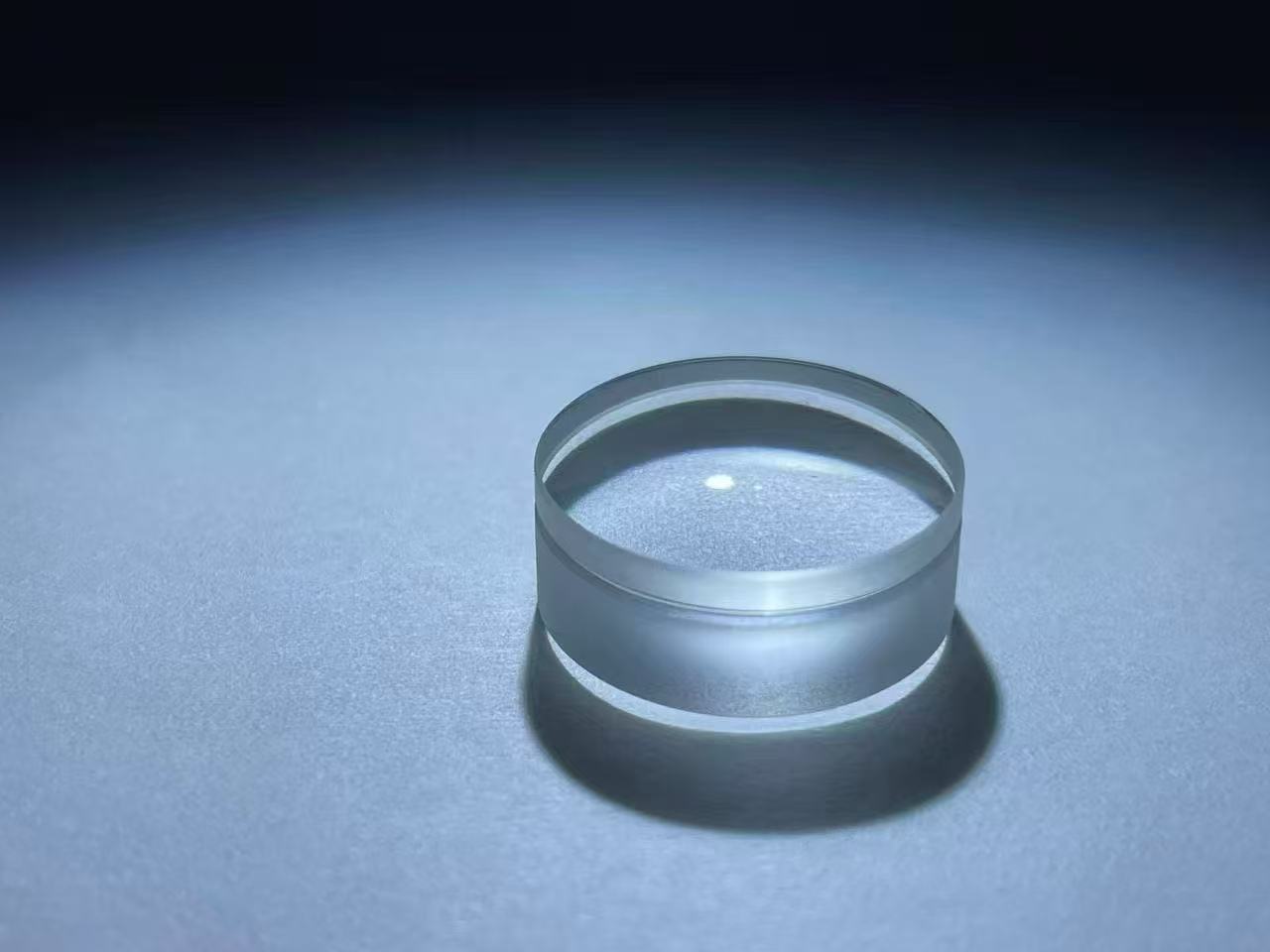
Plano-concave lenses are among the most fundamental and widely used optical components. These lenses have a flat surface (planar surface) and a concave surface (concave surface), giving them unique light-diverging properties that are indispensable in numerous industries. Unlike convex lenses, which converge light rays, plano-concave lenses diffuse light outwards, forming virtual images, playing a crucial role in fields ranging from vision correction to advanced optical instruments.
MOK Optics specializes in manufacturing precision plano-concave lenses that meet the stringent requirements of modern applications. With decades of experience in optical manufacturing, MOK Optics produces lenses with exceptional surface quality, precise curvature tolerances, and can be used with a variety of substrates, including BK7, fused silica, ZnSe, and CaF2. Whether you need standard components or custom solutions, MOK Optics offers high-performance, durable, and reliable plano-concave lenses.
Peephole: A Clever Lens Array for Security
One-Way View Principle
The unassuming peephole, also known as a door peephole or hatch, is one of the most ingenious applications of plano-concave lens technology. This simple device allows residents to observe the outside with a wide field of vision while preventing outsiders from peeping into the house—a crucial security feature that has protected countless homes and businesses.
The Optical Structure of a Standard Peephole
A typical peephole comprises a complex optical system consisting of a convex lens and three precisely arranged plano-concave lenses. Its working principle is as follows:
Wide-Angle Light Capture: Light entering from the outside passes through a small opening in the peephole (typically 5-8 mm in diameter).
Beam Spreading Through the Plano-Concave Lenses: The three plano-concave lenses sequentially diverge the incident light rays, spreading them outwards to capture a field of view exceeding 180 degrees.
Image Formation: The convex lens acts as the eyepiece, collecting the diverged light rays and presenting them as a reduced but recognizable virtual image.
The Galileo Telescope: Revolutionary Astronomical Observations with Simple Optical Elements
Galileo’s Breakthrough Design
In 1609, Italian astronomer Galileo Galilei built the first practical refracting telescope, using convex lenses and plano-concave eyepieces. This ingenious design, now known as the Galileo telescope, revolutionized astronomy and forever changed humanity’s understanding of the universe.
With his simple instrument, just over three feet long and with a magnification of 30x, Galileo made many astonishing discoveries, including:
Sunspots on the surface of the Sun
The phases of Venus, proving that the planet orbits the Sun
Mountains and craters on Earth’s moon
The four largest moons of Jupiter (now known as the Galilean moons)
The Optical Principle of the Galileo Telescope
The Galileo telescope worked based on a simple optical principle. A convex lens collects light from a distant object and focuses it to a point. However, unlike more complex telescope designs, the plano-concave eyepiece is located in front of the focal point of the objective lens—specifically, the distance between the eyepiece and the focal point is equal to the focal length of the eyepiece itself. This structure produced several notable characteristics:
Upright virtual image: Unlike inverted astronomical telescopes, the Galilean telescope produced an upright image, making it ideal for ground-based observations.
Compact design: The distance between the objective and eyepiece was equal to the difference in their focal lengths, resulting in a shorter tube than the Keplerian telescope.
Smaller image: The plano-concave eyepiece produced a smaller virtual image, but due to angular magnification, it appeared larger to the naked eye.
Magnification follows this relationship:
M = -f_objective / f_eyepiece
The negative sign indicates an upright image. For example, a 300mm objective paired with a 10mm plano-concave eyepiece yields 30x magnification.
Limitations and Modern Improvements
While the Galilean telescope design was revolutionary for its time, it also had significant drawbacks, such as a narrow field of view, chromatic aberration, and blurry images at high magnification. Modern telescope designs have largely superseded it, but its principles remain applicable in certain specific applications.
Plano-concave lenses can be used in:
Opera binoculars and compact binoculars
Laser system collimators
Beam expanders for industrial calibration
Telescope kits for science classroom teaching
Microscopes
Some microscope configurations use plano-concave lenses as field lenses to widen the field of view, or as relay lenses in optical systems requiring intermediate image reduction.
Photography and cinematography
Camera special effects lenses sometimes employ plano-concave lens elements to create unique “vortex bokeh” or correct distortion in ultra-wide-angle lenses.
Barcode scanners
Plano-concave lenses help shape laser beams into the elongated patterns needed to read barcodes at different distances.
Head-up displays (HUDs)
Head-up displays in aerospace and automotive applications use plano-concave lenses as part of a collimating optics system to project information to optical infinity.
Why choose MOK Optics’ plano-concave lenses?
MOK Optics is at the forefront of precision optical manufacturing. Every MOK Optics lens undergoes rigorous quality control, including interferometry, profilometry, and environmental durability verification. We offer highly competitive pricing, rapid prototyping, and mass production services from single-piece to multi-million-piece volumes to our customers in North America, Europe, and Asia.
Conclusion
As optical technologies continue to advance into fields such as virtual reality, LiDAR, and quantum computing, seemingly ordinary plano-concave lenses continue to play a crucial role. MOK Optics prides itself on manufacturing these critical components with unparalleled quality and precision. If you require custom optical components for mass production, our engineering team is ready to provide you with optical solutions that exceed your expectations.