
Introduction – Optical Contact Zero-Order Waveplates
In optics and photonics, controlling the polarization state of light is crucial for numerous applications, from laser systems to telecommunications and scientific research. Waveplates, also known as retarders, are important optical elements designed to manipulate the polarization of light by introducing a precise phase difference between orthogonally polarized light components. Among various types of waveplates, optical contact zero-order waveplates stand out for their superior performance, stability, and durability. This article delves into waveplates/retarders, focusing on the structure, types, characteristics, and practical applications of optical contact zero-order waveplates.
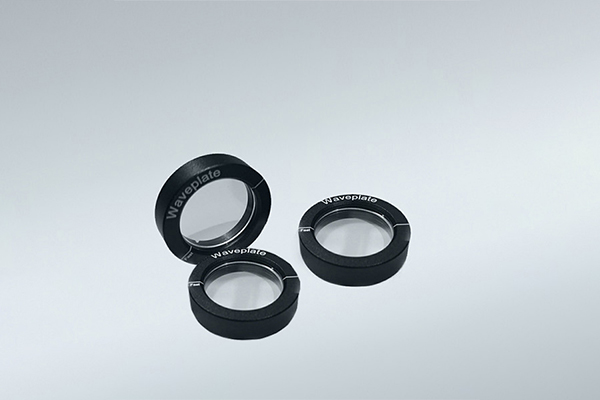
What is a Waveplate/Retarder?
A waveplate, or retarder, is an optical device made of a birefringent material (most commonly quartz crystal) that creates a phase difference between two orthogonally polarized components of incident light. Birefringence refers to the property of certain materials where the refractive index varies with the direction of polarization of the incident light.
How do waveplates work?
When unpolarized or polarized light enters a birefringent material, it splits into two components: one polarized parallel to the fast axis of the crystal, and the other parallel to the slow axis. Light polarized along the fast axis travels faster due to its lower refractive index, while light polarized along the slow axis travels slower due to its higher refractive index. This speed difference results in a phase difference, or retardation, between the two components.
The amount of retardation depends on the thickness of the waveplate and the difference in refractive index along the fast and slow axes. By precisely controlling these parameters, the waveplate can convert the polarization state of light, for example, from linear polarization to circular polarization, or rotate the polarization angle.
Typical Retardation Values
Waveplates are primarily classified according to their retardation value relative to the wavelength (λ) of the incident light:
λ/2 waveplate (half-wave plate): Rotates the polarization plane of linearly polarized light by twice the angle between the incident polarization direction and the fast axis of the waveplate.
λ/4 waveplate (quarter-wave plate): Converts linearly polarized light to circularly polarized light when the incident polarization direction is at a 45° angle to the fast axis, and vice versa.
Other retardation values can be used for special applications, but λ/2 and λ/4 remain the most commonly used.
Waveplate Types
There are several types of waveplates, each designed to meet specific performance standards and applications:
1. Multi-order waveplates
Description: The retardation of this type of waveplate is equal to an integer multiple of the full wavelength plus the required relative retardation.
Characteristics: Thicker (approximately 0.5 mm), more sensitive to temperature and wavelength variations.
Applications: Suitable for general laboratory applications where high precision is not required.
Advantages: Lower cost, easier to manufacture.
Disadvantages: Poor stability under varying environmental conditions.
2. Low-order waveplates
Description: Thinner than multi-order waveplates, with a retardation closer to the target relative wavelength.
Characteristics: Higher stability compared to multi-order waveplates.
Applications: Mid-range applications requiring higher performance.
3. Zero-order Waveplates
Zero-order waveplates provide the precise amount of delay needed without requiring additional full wavelength multiples, thus offering superior stability.
Subtypes:
Glued Zero-order Waveplate: Two quartz plates glued together with UV epoxy resin; offers a wide spectral and temperature bandwidth, but contains adhesive.
Air-gap Zero-order Waveplate: Two quartz plates mounted with an air gap; requires no adhesive and is suitable for high-power lasers.
Optical Contact Zero-order Waveplate: Two quartz plates connected via optical contact, requiring no adhesive and creating an epoxy-free optical path.
Optical Contact Zero-order Waveplate: The Gold Standard
What is Optical Contact?
Optical contact is a process that uses molecular attraction to bond two ultra-flat, clean optical surfaces together without any adhesive. This creates a strong, permanent, and epoxy-free bond, maintaining optical quality and durability.
Structure and Working Principle
Optical contact zero-order waveplates consist of two precision-polished quartz plates whose fast axes intersect at 90°. The thickness difference between the two quartz plates determines the net retardation. Because no epoxy resin is used to bond the two quartz plates, optical contact zero-order waveplates exhibit excellent optical performance. The calibration path is unaffected by birefringence or absorption caused by adhesive.
Key Characteristics
Epoxy-free structure: Eliminates adhesive-related optical distortion and performance degradation.
Double-layer retardation plate: Enhances stability and accuracy.
Wide spectral bandwidth: Maintains performance over a wide wavelength range.
Wide temperature bandwidth: Insensitive to temperature fluctuations.
High damage threshold: Suitable for high-power laser applications.
True zero-order retardation: Extremely low sensitivity to environmental factors.
Applications of Waveplates
Waveplates are indispensable in the following fields:
- Laser systems: Controlling polarization states, rotating polarization, and modulating laser beams.
- Optical instruments: Used in microscopes, ellipsometers, and spectrometers.
- Telecommunications: Managing polarization in fiber optic communications.
- Scientific Research: Facilitating experiments requiring precise polarization control.
- Medical Devices: Enhancing imaging and diagnostic equipment.
- Industry: Laser cutting, welding, and materials processing.
How to Choose the Right Waveplate?
When selecting a waveplate, consider the following factors:
- Delay Value: Choose λ/2 or λ/4 based on the desired polarization effect.
- Wavelength Range: Ensure the waveplate is optimized for your laser or source wavelength.
- Temperature Stability: For high precision, choose a zero-order waveplate.
- Damage Threshold: High-power lasers require waveplates with high damage thresholds.
- Structure Type: Optically contact zero-order waveplates are the preferred choice for optimal performance.
- Size and Surface Quality: The size and quality of the waveplate should match your system requirements.
- Coating: Anti-reflective coatings can improve transmittance and reduce losses.
Conclusion
Optical contact zero-order waveplates represent the pinnacle of waveplate technology, possessing unparalleled stability, durability, and optical performance. Their epoxy-free structure avoids common problems associated with adhesives, making them ideal for high-power, high-precision optical systems.
Whether you are involved in laser research, telecommunications, or advanced optical instrumentation, choosing the right waveplate—especially an optical contact zero-order waveplate—ensures optimal polarization control and system reliability.