
Introduction to Beam-Splitters
Beam-splitters can adjust the optical path, and their performance can affect the stability and accuracy of the entire optical system. Therefore, they play an important role in fields such as interferometry, quantum optics experiments, laser processing, and imaging systems.
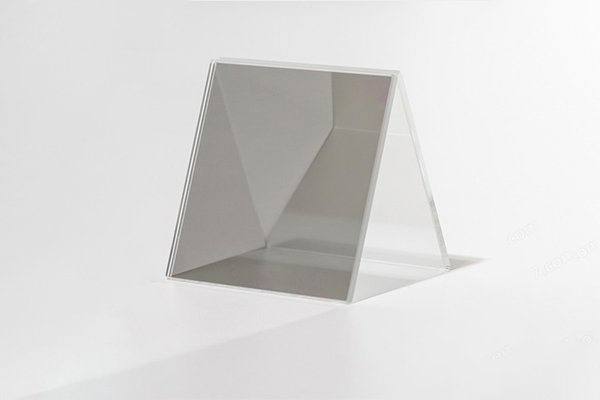
1. Technical Principles and Performance of Polarization Beam-Splitters
1.1 Basic Physical Mechanism of Polarization Beam Splitting
The core function of polarization beam-splitters lies in the selective control of the polarization state of incident light. Its physical basis is the polarization dependence of optical thin films—when unpolarized light or light of arbitrary polarization is incident at a specific angle, s-polarized light (electric field vector perpendicular to the incident plane) and p-polarized light (electric field vector parallel to the incident plane) will experience different reflection and transmission characteristics at the medium interface. This difference stems from the complex coupling relationship between refractive index and incident angle in the Fresnel equation.
Modern high-performance polarization beam-splitters typically employ a multilayer dielectric film design. By depositing dozens or even hundreds of optical thin films on the substrate surface, photonic structures with drastically different responses to s- and p-beams are constructed. The optimized film system can achieve high reflectivity of s-beams and high transmittance of p-beams across a wide spectral range (e.g., visible light 450-650nm or near-infrared), with an extinction ratio exceeding 1000:1.
1.2 Technical Challenges and Solutions for Large-Angle Aperture Design
Traditional polarization beam splitter cubes are limited by the structure of cemented prisms, resulting in a typically small effective aperture angle (within ±5°), making it difficult to meet the needs of wide-field optical systems. Planar polarization beam splitters, however, have an inherent advantage in this regard. By optimizing the film system design and matching the incident angle, the effective working angle can be extended to ±15° or even larger.
1.3 Performance Considerations in Practical Applications
In practical optical system integration, the performance evaluation of polarization beam splitter planar plates requires comprehensive consideration of multiple parameters:
Uniformity control is a key factor affecting image quality. Advanced coating technologies such as ion beam sputtering (IBS) or magnetron sputtering, combined with a planetary rotating substrate frame, can control film thickness non-uniformity within ±0.5%, ensuring consistent polarization performance within the aperture. This control is particularly important for large-diameter flat panels with diameters exceeding 100 mm.
Temperature stability directly affects the system’s reliability in variable temperature environments. By selecting substrate materials with matching coefficients of thermal expansion (such as fused silica) and film materials, and employing a more compact coating process, the temperature coefficient can be controlled within 0.001%/℃. Some high-stability designs can even maintain a polarization extinction ratio change of no more than 10% within a temperature range of -40°C to +85°C.
Laser damage threshold is a core indicator in laser applications. By optimizing the band structure of the film material, reducing defect density, and using graded refractive index interfaces to reduce electric field enhancement effects, modern polarization beam splitters can achieve a laser damage threshold of 15 J/cm² (10 ns pulse width) at a wavelength of 1064 nm, meeting the needs of most industrial laser processing.
Chapter 2: Design Philosophy and Technical Implementation of Unpolarized Beam Splitter Plates
2.1 Precision Optical Requirements for Polarization Preservation
In cutting-edge fields such as laser interferometry, polarization-coded communication, and quantum information processing, maintaining the polarization state of the beam is a prerequisite for the normal operation of the system. Unpolarized beam splitters are precision optical components developed against this backdrop. Unlike simply splitting unpolarized light equally, these components must ensure that the polarization state of the output beam is completely consistent with that of the input beam, avoiding the introduction of any polarization aberrations.
Achieving this requirement is far more complex than imagined. Traditional 50/50 beam splitters typically have different reflectivities and transmittances for s- and p-beams, which causes the originally linearly polarized beam to become elliptically polarized after splitting, thus affecting the efficiency and measurement accuracy of downstream optical components. For example, in a Michelson interferometer, this polarization dependence reduces interference contrast and may even introduce phase errors.
2.2 Complex Film System Design and Polarization Balancing Technology
Modern high-performance unpolarized beam splitters employ symmetrical film system structures or aperiodic designs, carefully balancing the multiple reflection interference effects of s-polarization and p-polarization at the interfaces of each film layer. A common strategy is to design a “polarization-independent” film thickness distribution, ensuring that the phase difference between s- and p-light reflections is close to an integer multiple of π, thus maintaining similar reflectivity over a wide spectral and angular range.
More advanced designs employ a dual-band optimization method: near the central operating wavelength, local optimization ensures that the reflectivity difference between s- and p-light is less than 0.5%; over a wider spectral range (e.g., ±50 nm), the difference is controlled within 2%. This design requires the comprehensive application of equivalent interface theory, admittance matching techniques, and global optimization algorithms, typically involving the alternating deposition of 30-50 layers of different thicknesses and materials.
It is worth noting that a perfectly “unpolarized” beam splitter is physically difficult to achieve because Maxwell’s equations in isotropic media are inherently polarization-sensitive. Therefore, the engineering goal is to reduce polarization sensitivity to an acceptable level under specific operating conditions. Taking MOK Optics’ specifications as an example, its beam splitter achieves polarization uniformity of |Ts-Tp| <10% and |Rs-Rp| <10%, meaning that for incident light of any polarization state, the polarization state changes of the transmitted and reflected beams are minimal, fully meeting the requirements of most high-precision applications.
Chapter 3: Precision Manufacturing Process and Quality Control System
3.1 Selection and Processing of Substrate Materials
The optical uniformity, thermal stability, and mechanical strength of the substrate material are fundamental guarantees for the performance of the beam splitter. N-BK7, as a classic borosilicate crown glass, has excellent transmittance and a moderate refractive index (nd=1.5168) in the visible light band, and its relatively economical price makes it the preferred choice for most commercial applications. Its high Abbe number (vd=64.2) and low dispersion help reduce the influence of chromatic aberration in broadband applications. For ultraviolet or high-power laser applications, ultraviolet fused silica (UVFS) exhibits irreplaceable advantages. It exhibits high transmittance across a broad spectral range (185nm-2.1μm) from deep ultraviolet to near-infrared, with an extremely low coefficient of thermal expansion (5.5×10⁻⁷/℃) and a small thermo-optical coefficient, enabling it to maintain good surface stability under high-power laser irradiation. Furthermore, controlling the OH content of the fused silica (typically <10ppm) reduces ultraviolet absorption and increases the laser damage threshold. Surface control is the core technology in precision machining.
3.2 Precision Control of Coating Process
Modern optical coating has evolved from simple thickness control to complex multilayer structure engineering. Electron beam evaporation (EBE) combined with ion-assisted deposition (IAD) is a commonly used technique for producing high-quality dielectric films, offering advantages such as high film purity and low scattering loss. However, for applications requiring the most stringent polarization control, ion beam sputtering (IBS) technology is favored due to its superior film density and stability.
Real-time monitoring during the coating process is crucial. Optical monitoring methods, by measuring changes in transmittance or reflectance, can control the thickness of a single-layer film to an accuracy of ±0.1%. More advanced broadband monitoring systems can simultaneously monitor multiple wavelengths, achieving precise control over complex film systems. For polarization-splitting films, it is typically necessary to monitor the reflectance of both s- and p-polarizations simultaneously to ensure that polarization performance meets design targets.
Uniformity control is particularly important on large-size substrates. By designing special baffle systems, optimizing the substrate rotation trajectory, and adjusting the evaporation source distribution, the film thickness non-uniformity on a 150mm diameter substrate can be controlled within ±0.3%. For polarization-sensitive film systems, this uniformity directly affects the effective aperture and angular performance.
3.3 Precise Control and Measurement of Beam Deflection
A beam deflection tolerance of 1 arcminute (arcmin) is equivalent to 0.0167 degrees. This stringent requirement stems from the demands of high-precision optical systems. In long-path interferometers or lidar systems, minute beam deflections are significantly amplified after multiple reflections or long-distance propagation, leading to spot shift, alignment difficulties, and even measurement errors.
Beam deflection primarily stems from errors in the substrate’s wedge angle and the uniformity of the coating layer. Through double-sided synchronous processing technology, the wedge angle of the N-BK7 substrate can be controlled to within 2 arcseconds. More importantly, the symmetry management of film stress during the coating process—by depositing stress-matched layers on both sides of the substrate or releasing stress through annealing—minimizes the deformation introduced by the coating.
Measuring such minute deflections requires a high-precision autocollimator or digital interferometer. Modern measurement systems employ four-quadrant detectors or high-resolution CCDs, combined with image processing algorithms, to improve angle measurement accuracy to the order of 0.1 arcseconds. Dynamic measurement techniques can also evaluate deflection stability under different temperatures or mechanical stresses, providing more comprehensive data support for practical applications.