
Introduction: The Cornerstone of Polarized Light Manipulation
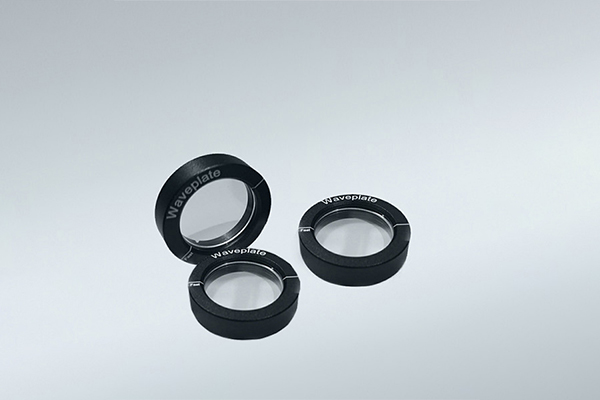
In modern optical systems, waveplates, as a fundamental and crucial polarization manipulation element, play an indispensable role. From basic scientific research to industrial applications, from precision measurement to quantum communication, the evolution of waveplate technology has always been closely linked to the history of optical development. Behind these seemingly simple optical components lie profound principles of crystal physics, wave optics, and materials science. This article will delve into the working principles, classification system, manufacturing process, and diverse applications of waveplates in modern technology.
I. Working Principles and Physical Basis of Waveplates
1.1 The Essence of Birefringence
The core working mechanism of waveplates is based on the special physical phenomenon of birefringence. The most significant characteristic of birefringent materials is their anisotropy in response to the electric vector vibration direction of light waves. When a beam of unpolarized light enters a birefringent crystal, the asymmetry of the atomic arrangement within the crystal causes its response to an applied electromagnetic field to differ in different directions.
This anisotropy manifests optically as a difference in refractive index: for light polarized along a specific direction (called the fast axis), the crystal exhibits a lower refractive index; while for light polarized perpendicular to it (called the slow axis), it exhibits a higher refractive index. Although this difference in refractive index is small (typically on the order of 0.01), it is sufficient to produce a significant phase retardation effect.
1.2 Mathematical Description of Phase Retardation
From the perspective of wave optics, we can accurately describe this process using a mathematical model. Consider a beam of linearly polarized light incident on a waveplate at a specific angle; its electric vector can be decomposed into two orthogonal components along the fast and slow axes. Due to the different refractive indices in the two directions, the two components will propagate at different phase velocities as the light wave propagates in the crystal.
1.3 Common Types of Retardation and Their Optical Effects
Based on the amount of phase retardation produced, waveplates are mainly divided into two basic types: half-wave plates and quarter-wave plates.
A half-wave plate (λ/2 waveplate) produces a phase retardation of π radians (180°). The main function of this type of waveplate is to rotate the polarization direction of linearly polarized light. When a linearly polarized beam of light is incident at an angle θ to the fast axis, the polarization direction of the outgoing light will rotate by an angle 2θ while maintaining its linear polarization state. This property makes half-wave plates important in laser system polarization control, optical isolation, and interferometry.
A quarter-wave plate (λ/4 waveplate) produces a phase delay of π/2 radians (90°). These waveplates can convert between linearly polarized and circularly polarized light. When linearly polarized light is incident at a 45° angle to the fast axis of a quarter-wave plate, the outgoing light becomes circularly polarized; conversely, circularly polarized light becomes linearly polarized after passing through the quarter-wave plate. This conversion capability makes quarter-wave plates indispensable in elliptically polarization measurements, stress analysis, and quantum optics experiments.
II. Material Selection and Manufacturing Process of Wave Plates
2.1 Crystal Quartz: An Ideal Birefringent Material
Although various birefringent materials exist, crystal quartz remains the most commonly used material for manufacturing wave plates, primarily due to its excellent comprehensive properties:
Quartz crystals possess stable birefringence characteristics, with a birefringence of approximately 0.009 in the visible light range, and its variation with wavelength is relatively gradual. Secondly, quartz exhibits excellent mechanical properties and chemical stability, high hardness, strong scratch resistance, and is unaffected by most chemical reagents. Furthermore, quartz crystals possess good transmittance across a wide spectral range (from deep ultraviolet to near-infrared), making it suitable for various spectral applications. In addition, quartz has a low coefficient of thermal expansion and a relatively low thermo-optical coefficient, ensuring the performance stability of the wave plate under varying temperature conditions.
2.2 Evolution and Refinement of Manufacturing Processes
The manufacturing of wave plates is a precise optical processing art involving several key steps:
Raw material selection and orientation are the first and crucial step. The optical axis orientation of natural or artificially grown quartz crystals needs to be precisely determined, as the relative position of the fast and slow axes of the waveplate to the crystal’s optical axis directly determines its optical performance. Modern X-ray diffraction technology can accurately determine crystal orientation with an error controllable within 0.1°.
The cutting and grinding processes determine the thickness accuracy of the waveplate. For multi-order waveplates, the thickness accuracy requirements are relatively relaxed, typically controlled at the micrometer level; however, for zero-order waveplates, especially cemented zero-order waveplates, thickness control needs to reach sub-micrometer or even nanometer precision. Advanced CNC grinding and polishing technologies make this possible.
Surface treatment and coating are crucial for ensuring the optical performance of the waveplate. Ultra-smooth surfaces can minimize scattering losses, while the application of antireflective coatings can significantly improve light transmittance in specific wavelength bands and reduce ghosting and interference effects caused by surface reflection.
2.3 Special Process: Manufacturing of Cemented Zero-Order Waveplates
The manufacturing of cemented zero-order waveplates represents the pinnacle of precision in waveplate technology. This type of waveplate consists of two quartz crystals whose fast axes are perpendicular to each other, precisely bonded together using UV-cured epoxy resin.
The bonding process must be carried out in a cleanroom environment to eliminate the influence of dust particles on the bonded layer. The selection of the UV-cured epoxy resin is also crucial, requiring high transparency, low stress, good thermal stability, and a coefficient of thermal expansion similar to quartz. After bonding, the assembly requires annealing to release internal stress and ensure long-term stability.
III. Classification System and Technical Characteristics of Waveplates
3.1 Multi-level Waveplates: Basic Principle Type
Multi-level waveplates are the simplest and most economical type of waveplate. Their thickness is an integer multiple of the minimum thickness required to produce the desired delay plus a basic delay thickness.
The main advantages of multi-level waveplates are their relatively simple manufacturing process and low cost, making them suitable for applications where wavelength and temperature stability requirements are not high. However, this type of waveplate has significant limitations: its delay is extremely sensitive to changes in wavelength and temperature. The rate of change of phase delay with wavelength is proportional to the waveplate order m, meaning that thicker multi-level waveplates have narrower operating bandwidths. Similarly, thermal expansion and thermo-optical effects caused by temperature changes significantly alter the retardation, limiting its application in environments with fluctuating temperatures.
3.2 Low-Order Waveplates: A Balance Between Performance and Cost
Low-order waveplates are an improvement on multi-order waveplates, with a smaller order m (typically 1-3 orders), achieving a better balance between thickness and performance. Compared to high-order multi-order waveplates, low-order waveplates exhibit significantly reduced sensitivity to wavelength and temperature, while maintaining relatively simple manufacturing processes and moderate costs.
These waveplates are widely used in mid-range optical systems with certain performance requirements but limited budgets, such as educational experimental equipment, industrial testing instruments, and some scientific research equipment. They offer a wider operating bandwidth and better temperature stability than multi-order waveplates, while avoiding the high cost of zero-order waveplates.
3.3 Achromatic Waveplates: A Broadband Application Solution
Achromatic waveplates are innovative solutions designed to overcome the narrow-band limitations of conventional waveplates. These waveplates are typically composed of two or more birefringent materials with different dispersion characteristics. Through dispersion compensation between the materials, a relatively constant retardation is achieved over a wide spectral range.
Achromatic waveplates are particularly important in applications requiring wide-spectral operation, such as white-light interferometers, broadband ellipsometers, and multi-wavelength laser systems. Despite their higher cost and more complex design, their superior broadband performance makes them indispensable in high-end optical systems.
3.4 Zero-Order Waveplates: The Choice for Precision Optical Systems
Zero-order waveplates represent the highest level of precision in waveplate technology. The thickness of these waveplates is precisely what produces the required retardation, i.e., m=0. There are two main methods to achieve zero-order retardation: monolithic zero-order waveplates and cemented zero-order waveplates.
Monolithic zero-order waveplates are extremely thin (typically tens of micrometers in the visible light range), difficult to manufacture, have low mechanical strength, are fragile, and difficult to handle. Therefore, cemented zero-order waveplates are more common in practical applications. They are created by cementing two crystals with perpendicular fast axes, utilizing their thickness difference to produce the required retardation, while the total thickness provides sufficient mechanical stability. The most prominent advantage of zero-order waveplates is their extremely low wavelength and temperature sensitivity. Compared to multi-order waveplates, their delay changes with wavelength at a rate more than an order of magnitude lower.
IV. Applications of Waveplates in Modern Technology
4.1 Laser Technology and Optical Communication
In the field of laser technology, waveplates are indispensable polarization control components. In high-power laser systems, waveplates combined with polarizing beam splitters form optical isolators, preventing reflected light from returning to the laser cavity and causing instability or even damage. In fiber optic communication, waveplates are used for polarization state control and polarization mode dispersion compensation, improving signal transmission quality and bandwidth.
Quantum communication is a cutting-edge application of waveplates. In quantum key distribution systems, waveplates are used to accurately prepare and measure the polarization state of photons, which is the foundation for quantum information encoding and decoding. In particular, the low temperature sensitivity and high wavelength stability of zero-order waveplates ensure the reliability and security of quantum state transmission.
4.2 Precision Measurement and Sensing Technology
Ellipsometry is an important tool in materials science and surface analysis, and the quarter-wave plate is its core component. By precisely controlling changes in polarization state, thin film thickness (with sub-nanometer accuracy), optical constants, and surface roughness can be measured, finding wide applications in semiconductor process monitoring, optical coating quality inspection, and biosensor development.
In interferometry, waveplates are used to control the polarization state of reference and test beams, reducing coherence noise and improving measurement accuracy. Particularly in white light interferometers, achromatic waveplates ensure consistent polarization characteristics across the entire spectrum, resulting in accurate surface topography measurements.
4.3 Imaging and Display Technologies
Polarization imaging technology obtains information unavailable in traditional intensity imaging by analyzing the polarization characteristics of light reflected or emitted by an object. Waveplates are used in this technology to modulate incident light and separate polarization components, playing a crucial role in biomedical imaging (such as polarization OCT), remote sensing, and machine vision.
Liquid crystal display technology is essentially based on the principle of controllable birefringence. While modern LCDs do not use traditional crystal waveplates, understanding their working principles is essential for designing the delay characteristics of liquid crystal cells and optimizing viewing angles and contrast. Furthermore, waveplates are still used in high-end projection systems and augmented reality/virtual reality displays to improve image quality and polarization management.
V. Development Trends and Future Prospects of Waveplate Technology
5.1 New Materials and Structures
With the advancement of materials science, novel birefringent materials are constantly emerging, bringing new possibilities to waveplate technology. Liquid crystal polymer (LCP) waveplates have the potential for tunable delay, large-area fabrication, and low cost; metamaterial waveplates achieve birefringence through subwavelength structures, breaking the limitations of natural materials; while two-dimensional materials such as hexagonal boron nitride (h-BN) provide atomically thin birefringent layers.
Tunable waveplates have been a research hotspot in recent years. Through electro-optic, magneto-optic, or thermo-optic effects, the delay can be dynamically adjusted to meet the needs of adaptive optics systems. Liquid crystal waveplates have achieved commercial success in this area, while high-speed waveplates based on electro-optic crystals such as lithium tantalate (LiTaO₃) show potential in optical communication and quantum control.
5.2 Integration and Miniaturization
The rise of photonic integration technology has driven the miniaturization and integration of waveplates. On silicon-based optoelectronic platforms, micrometer-scale waveplates can be fabricated by etching subwavelength grating structures, and then monolithically integrated with waveguides, modulators, and detectors. These integrated waveplates are not only small in size and highly stable, but can also be mass-produced using micro- and nano-fabrication techniques, significantly reducing costs.
Metasurface waveplates represent the latest development direction in waveplate technology. These two-dimensional structures composed of subwavelength antenna arrays can precisely control the phase, amplitude, and polarization of light waves, achieving the functions of traditional waveplates within extremely thin thicknesses (typically on the order of wavelength). Metasurface waveplates not only significantly reduce thickness but also allow for the design of special functions that are impossible with traditional crystals, such as geometric phase control, multi-wavelength operation, and asymmetric transmission.
Conclusion
From simple crystal sheets to complex integrated optical components, the development of waveplate technology reflects the progress of modern optical engineering. These seemingly tiny components play an irreplaceable role in controlling the polarization state of light waves, supporting a wide range of fields from basic scientific research to cutting-edge technological applications. With the continuous emergence of new materials, processes, and concepts, waveplate technology will inevitably continue to evolve, playing an increasingly important and diverse role in future optical systems. Understanding the basic principles, types, characteristics, and applications of waveplates not only helps in selecting suitable components to meet specific needs but also stimulates innovative thinking, driving the continuous expansion of the boundaries of optical technology.