
Introduction of Cylindrical Lense
Among numerous optical components, cylindrical lenses stand out for their unique ability to shape and control laser beams in one dimension. They are particularly crucial when creating laser line generators or circular beams using the output of elliptical laser diodes. This guide delves into the principles and applications of cylindrical lenses, focusing on how to create laser line generators and circular beams.
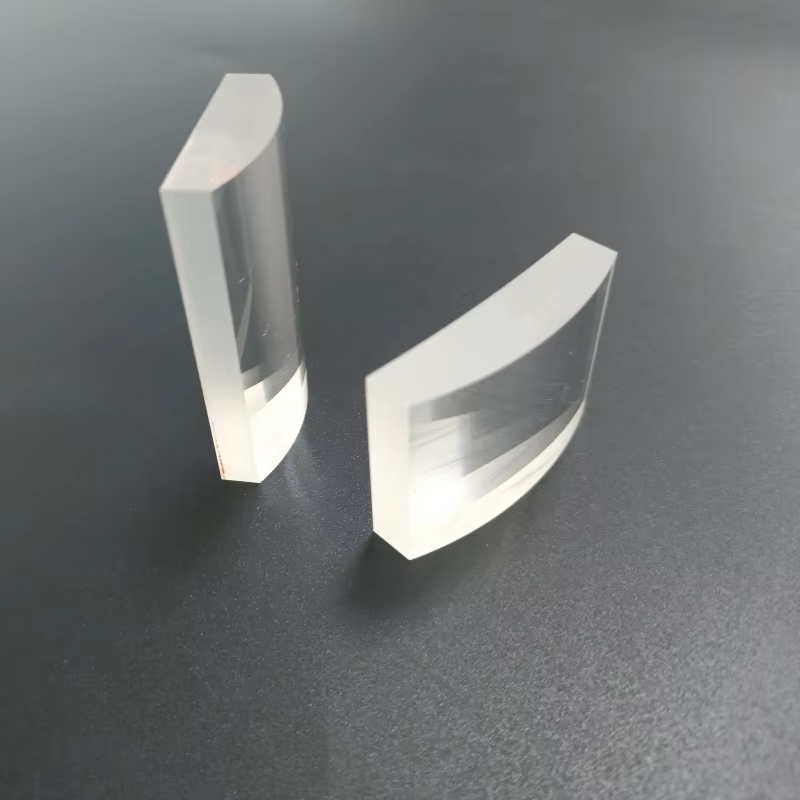
What is a Cylindrical Lense?
A cylindrical lens is a lens with different curvatures along two perpendicular axes (the X and Y axes). Cylindrical lenses can focus or expand light into a line or a single axis, making them suitable for applications requiring image magnification.
Key Characteristics of Cylindrical Lenses
Cylindrical: The lens surface is curved in one direction and flat in the perpendicular direction.
Single-Axis Magnification: Magnifies or compresses an image or beam along a single axis.
Types: Plano-convex cylindrical lenses, plano-concave cylindrical lenses, biconvex cylindrical lenses, and apertures of various shapes such as circular, rectangular, or elliptical.
Materials: Typically made of optical glass (such as BK7), fused silica, or special materials for infrared or ultraviolet applications.
Common Applications of Cylindrical Lenses
- Laser Line Generation
- Beam Shaping and Circularization
- Astigmatism Correction in Imaging Systems
- Optical Metrology and Inspection
- Medical Imaging and Diagnostics
- Semiconductor Manufacturing
- Creating Laser Line Generators Using Cylindrical Lenses
- Laser line generators convert a laser beam into a thin, uniform line of light, which is crucial for applications such as barcode scanning, surface profiling, and alignment tools.
How Do Cylindrical Lenses Achieve Laser Line Generation?
Cylindrical lenses expand or focus the laser beam along one axis while keeping the vertical axis constant. This results in a fan-shaped or line projection of the beam, rather than a point.
Important Considerations for Designing Laser Line Generators
Effective Focal Length (EFL): Determines the lens’s ability to spread the beam over a specific distance.
Working Distance: The distance between the lens and the target surface from which the light is projected.
Required Line Length: The length of the laser line on the target surface.
MOK Optics Cylindrical Lens Product Line
MOK Optics offers a range of cylindrical lenses optimized for laser line generation, including:
- Planco-convex circular cylindrical lenses
- Planco-convex rectangular cylindrical lenses
- Planco-convex elliptical cylindrical lenses
These lenses have different apertures and focal lengths, allowing for precise customization of the laser line to meet your application needs.
How to Convert Elliptical Laser Output to a Circular Beam
Due to limitations in chip geometry, laser diodes typically emit elliptical beams, which can pose problems for applications requiring a circularly collimated beam, such as laser cutting or optical communication.
Why Circularize a Laser Beam?
A uniform beam shape improves focusing quality.
Enhanced coupling efficiency with fiber optic or optical systems.
Reduced beam divergence, suitable for long-distance applications.
Achieving Beam Circularization Using Cylindrical Lenses
A common approach is to use a dual-lens system:
First cylindrical lens: Amplifies the minor axis of the elliptical beam.
Second cylindrical lens: Collimates the amplified beam, forming a circular cross-section.
Advantages of Cylindrical Lens Beam Circulation
Improved beam symmetry.
Reduced beam divergence.
Enhanced system performance in laser processing and imaging.
Cylindrical Lens Selection Guide: How to Choose the Right Lens
Choosing the right cylindrical lens is crucial for achieving optimal beam shaping and system performance. The following is a detailed guide based on the MOK Optics product line and industry standards.
1. Lens Types and Shapes
Plano-convex cylindrical lenses: Suitable for focusing or extending beams along a single axis.
Plano-concave cylindrical lenses: Used for beam divergence or correction.
Circular aperture: Best suited for symmetrical beam shaping.
Rectangular or elliptical aperture: Suitable for custom beam profiles or specific line shapes.
2. Focal Length
Shorter focal lengths produce wider fan angles and longer laser lines at close range.
Longer focal lengths produce narrower fan angles, suitable for distant targets.
3. Aperture Size
The lens aperture should match the laser beam diameter to avoid beam clipping.
Larger apertures can handle higher power and reduce diffraction effects.
4. Materials and Coatings
Optical Glass (BK7): Standard material for visible to near-infrared lasers.
Fused Quartz: Ideal for ultraviolet and high-power applications.
Anti-reflective coatings minimize losses and maximize transmittance.
5. Surface Quality and Tolerances
High surface quality reduces aberrations and scattering.
Tight tolerances ensure consistent focal length and performance.
Why Choose MOK Optics Cylindrical Lenses?
MOK Optics is a professional manufacturer of optical components, renowned for its high-quality optical components, including a wide range of cylindrical lenses for laser applications.
Advantages of MOK Optics Cylindrical Lenses
Precision Manufacturing: Advanced grinding and polishing processes ensure superior optical quality.
Material Diversity: From standard optical glass to specialized infrared and ultraviolet materials.
Customization: Tailor-made solutions to meet unique application needs.
Competitive Pricing: High-quality optics at an affordable price.
Conclusion
Cylindrical lenses are essential tools for creating laser line generators and circular beams, providing unparalleled control over the shape and propagation of laser beams. Whether you are designing industrial laser scanners, medical imaging systems, or high-precision optics, understanding the capabilities and selection criteria of cylindrical lenses is crucial. By leveraging the expertise and product portfolio of manufacturers like MOK Optics, you can customize optics to meet your specific needs, ensuring superior performance and reliability.